
More Information
Submitted: June 23, 2026 | Accepted: July 01, 2026 | Published: July 02, 2026
Citation: Tiendrebeogo S, Compaore CS, Zongo S, Dicko MH. Amino Acid Profile of Saba senegalensis Fruit Pulp and Its Nutritional Impact across Five Regions of Burkina Faso: Chromatographic and Statistical Analysis. Arch Surg Clin Res. 2026; 10(2): 8-12. Available from:
https://dx.doi.org/10.29328/journal.ascr.1001096
DOI: 10.29328/journal.ascr.1001096
Copyright license: © 2026 Tiendrebeogo S, et al. This is an open access article distributed under the Creative Commons Attribution License, which permits unrestricted use, distribution, and reproduction in any medium, provided the original work is properly cited.
Keywords: Saba senegalensis; Amino acids; Regions; Nutritional; Variation; Pulp

Amino Acid Profile of Saba senegalensis Fruit Pulp and Its Nutritional Impact across Five Regions of Burkina Faso: Chromatographic and Statistical Analysis
Salamata Tiendrebeogo1,2*, Clarisse Sidbewende Compaore1, Sandrine Zongo2 and Mamoudou H Dicko2
1Department of Food Technology (DTA), Institute for Research in Applied Sciences and Technologies (IRSAT), National Centre for Scientific and Technological Research (CNRST), Ouagadougou, Burkina Faso
2Laboratory of Biotechnology, Food Technology, and Nutrition (LABIOTAN), Department of Biochemistry and Microbiology (DBM). Joseph KI-ZERBO University, Ouagadougou, Burkina Faso
*Corresponding author: Salamata Tiendrebeogo, Department of Food Technology (DTA), Institute for Research in Applied Sciences and Technologies (IRSAT), National Centre for Scientific and Technological Research (CNRST), Ouagadougou, Burkina Faso, Email: [email protected]
Saba senegalensis fruit grows wild across West Africa, and its tangy pulp is a valued part of local diets. Despite this, its nutritional profile, particularly its amino acid composition, remains poorly documented. Our research aimed to analyze and compare the amino acid composition of S. senegalensis fruit pulp collected from 20 villages across five regions of Burkina Faso (Cascades, Sud-Ouest, Boucle du Mouhoun, Nord, and Centre-Sud). After acid hydrolysis, amino acids were quantified by high-performance liquid chromatography (HPLC) and analyzed by principal component analysis (PCA) to identify regional differences. Lysine was the most prevalent amino acid across all samples (0.28-0.30 mg/100 g of fresh pulp), followed by glutamic acid, with variation depending on region. Amino acids like methionine and cysteine were present only in trace amounts. PCA revealed significant regional differences, especially for serine in the Sud-Ouest region. Overall, the pulp of S. senegalensis has a rich amino acid profile, notably high in lysine, making it a beneficial supplement for cereal-based diets that often lack this essential amino acid. This opens up possibilities for better utilization and selection of this food resource.
Saba senegalensis, often called 'wedga' or 'madd' in West Africa, is a wild vine belonging to the Apocynaceae family that bears highly valued fruits. It holds both economic and cultural importance across several tropical African nations, including Burkina Faso, Côte d’Ivoire, Ghana, and Senegal. This resilient plant adapts to various climates, including temperate, dry, and humid tropical [1]. Its juicy, tangy pulp can be eaten directly or processed into juice, syrup, or jam [2,3]. In Burkina Faso, these fruits are crucial to local diets and provide seasonal income for many rural communities [4,10,14,15]. Nutritionally, they provide essential micronutrients vital to health and offer high nutritional value, while remaining affordable and accessible to all social groups.
Indeed, previous studies have reported that the pulp of S. senegalensis fruit contains a notable amount of vitamin C and sugars [4,7,15-17], as well as a very low protein content. However, there is almost no data available on the amino acid composition of S. senegalensis fruit pulp. Nevertheless, this profile is essential for assessing the nutritional quality of a protein, as it determines the extent to which it can meet our essential amino acid needs [6]. Moreover, for plant-based products, this composition can vary significantly across regions, depending on climate, soil type, plant variety, and postharvest processing [8]. Furthermore, the sustainable and cost-effective use of these fruits is constrained by their low added value and minimal processing. It is urgent to improve current knowledge of these fruits and to explore all avenues of utilization to increase the production and productivity of these forest fruit species. The present study aims to establish the complete amino acid profile of S. senegalensis fruit pulp collected from five regions of Burkina Faso and to analyze the geographical variation in this profile using multivariate statistical methods. This data will help us better understand the nutritional value of this resource and, where appropriate, guide strategies for its valorization.
Sample collection
Ripe fruits of S. senegalensis were collected from 20 villages, with four samples per region (5 regions) in Burkina Faso (Table 1). The selection of villages was intended to encompass a range of agroecological zones. The samples were collected between June and September 2021 across different regions, depending on the fruit-ripening period. At each site, the fruits were picked from at least five different trees and then transferred to the Food Technology Department's analysis workshop. After washing with soap, disinfecting with bleach, rinsing with tap water, and opening the fruits, the pulp was separated from the seeds by blending without adding water, and the mixture was then stored in the refrigerator for analysis (Figure 1).
| Table 1: Main regions are based on sampling villages for the fruit Saba senegalensis. | |
| Region name | Villages |
| Cascades | Karfiguela, Sinyana, Kankalaba et Oueleni |
| Sud-Ouest | Dakira, Tadoteon, Barkperena et Tienkouera |
| Boucle du Mouhoun | Bagala, Dara, Ouahabou et Ouroubono |
| Nord | Sissamba, Sounkouissi, Fili et Lougouri |
| Centre-Sud | Guiaro Pinyiri, Sambsen et Tanguen |
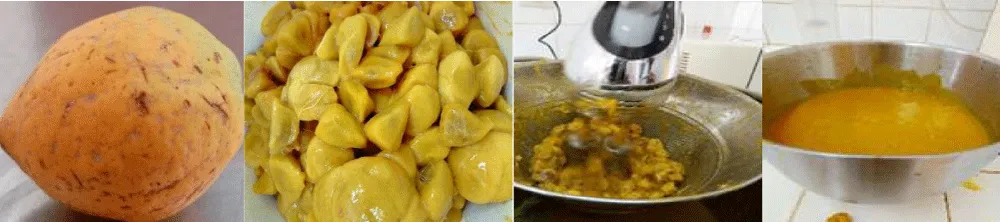
Figure 1: Fruit, fleshy seeds, and fruit pulp of S. senegalensis.
Dosage of amino acids
To determine the amino acid profile, liquid chromatography (HPLC) is performed using the Waters PICO-TAG method [9], which proceeds in three main steps. First, the sample is hydrolyzed with 6 N HCl at 105 °C for 24 hours. Next, derivatization is carried out pre-column with phenylisothiocyanate (PITC), which converts the amino acids into phenylthiocarbamyl (PTC) derivatives. Finally, the analysis is performed by reversed-phase HPLC using Waters columns, UV detection at 254 nm, and a two-eluent system (A and B).
Each analysis was carried out in triplicate to ensure the reliability of the results.
Statistical analysis
The results were analyzed using Microsoft Excel 2021 or XLSTAT-Basic 2020.3. Statistical analyses across regions were conducted using a one-way analysis of variance (ANOVA), followed by Tukey's multiple comparisons test at p < 0.05, and principal component analysis (PCA). All analyses were performed in triplicate, and results were expressed as mean differences with standard deviations.
General amino acid profile
The determination of the amino acid (AA) content of Saba senegalensis fruit pulps focused on 17 amino acids, including eight (08) essential and nine (09) non-essential, according to their role in the body (Table 2). The results show that the amino acid content of pulp samples varied across villages in the five regions of Burkina Faso (Table 2). The statistical analysis of the results highlights significant differences between villages within the same region and between regions (p < 0.05; Table 2).| Table 2: Profile of amino acids in the pulp of Saba senegalensis fruits according to the villages. (mg/100g). | ||||||||||||||||||
| Regions | Villages | Met | Ile | Leu | Lys | Tyr | Phe | Thr | Val | Asp | Glu | Ser | Gly | His | Arg | Ala | Pro | Cys |
| Cascades | Karfiguela | 0 | 0,02 | 0,03 | 0,31 | 0,01 | 0,02 | 0,02 | 0,02 | 0,04 | 0,08 | 0,02 | 0,02 | 0,01 | 0 | 0,02 | 0,02 | 0 |
| Sinyana | 0 | 0,02 | 0,03 | 0,31 | 0,01 | 0,02 | 0,02 | 0,02 | 0,04 | 0,08 | 0,02 | 0,02 | 0,01 | 0 | 0,02 | 0,02 | 0 | |
| Kankalaba | 0 | 0,02 | 0,04 | 0,26 | 0,01 | 0,02 | 0,02 | 0,03 | 0,05 | 0,08 | 0,02 | 0,02 | 0,02 | 0,02 | 0,02 | 0,02 | 0 | |
| Oueleni | 0 | 0,02 | 0,03 | 0,24 | 0 | 0,02 | 0,01 | 0,02 | 0,03 | 0,06 | 0,01 | 0,02 | 0,02 | 0 | 0,02 | 0,02 | 0 | |
| Average* | 0 | 0,02 | 0,03 | 0,28 | 0,01 | 0,02 | 0,02 | 0,02 | 0,04 | 0,07 | 0,02 | 0,02 | 0,01 | 0,00 | 0,02 | 0,02 | 0 | |
| Sud-Ouest | Dakira | 0 | 0,02 | 0,04 | 0,29 | 0,02 | 0,02 | 0,02 | 0,03 | 0,05 | 0,08 | 0,03 | 0,02 | 0,01 | 0 | 0,02 | 0,02 | 0 |
| Tadoteon | 0 | 0,03 | 0,05 | 0,3 | 0,02 | 0,03 | 0,03 | 0,04 | 0,06 | 0,13 | 0,03 | 0,03 | 0,02 | 0,02 | 0,03 | 0,04 | 0 | |
| Barkperena | 0,02 | 0,04 | 0,05 | 0,38 | 0,03 | 0,04 | 0,03 | 0,04 | 0,06 | 0,11 | 0,03 | 0,03 | 0,05 | 0,03 | 0,03 | 0,04 | 0 | |
| Tienkouera | 0,01 | 0,03 | 0,05 | 0,25 | 0,03 | 0,03 | 0,03 | 0,03 | 0,05 | 0,11 | 0.20 | 0,03 | 0,03 | 0 | 0,01 | 0,04 | 0 | |
| Average* | 0,01 | 0,03 | 0,05 | 0,30 | 0,02 | 0,03 | 0,03 | 0,03 | 0,05 | 0,11 | 0,07 | 0,03 | 0,03 | 0,01 | 0,02 | 0,03 | 0 | |
| Boucle du Mouhoun | Ouahabou | 0 | 0,02 | 0,03 | 0,26 | 0 | 0,02 | 0,01 | 0,02 | 0,03 | 0,06 | 0,02 | 0,02 | 0 | 0 | 0,02 | 0,02 | 0 |
| Ouroubono | 0 | 0,02 | 0,03 | 0,26 | 0 | 0,02 | 0,01 | 0,02 | 0,03 | 0,06 | 0,02 | 0,02 | 0 | 0 | 0,02 | 0,02 | 0 | |
| Bagala | 0 | 0,03 | 0,05 | 0,3 | 0,02 | 0,03 | 0,02 | 0,03 | 0,06 | 0,11 | 0 | 0,03 | 0,08 | 0,02 | 0,03 | 0,03 | 0 | |
| Dara | 0,02 | 0,04 | 0,05 | 0,37 | 0,04 | 0,05 | 0,03 | 0,04 | 0,05 | 0,1 | 0,03 | 0,03 | 0,04 | 0,03 | 0,03 | 0,03 | 0 | |
| Average* | 0,00 | 0,03 | 0,04 | 0,29 | 0,01 | 0,03 | 0,02 | 0,03 | 0,04 | 0,08 | 0,02 | 0,02 | 0,03 | 0,01 | 0,02 | 0,02 | 0 | |
| Nord | Sissamba | 0 | 0,02 | 0,04 | 0,31 | 0,02 | 0,03 | 0,02 | 0,03 | 0,05 | 0,09 | 0,02 | 0,02 | 0,01 | 0,02 | 0,03 | 0,02 | 0 |
| Somiaga | 0,01 | 0,02 | 0,04 | 0,29 | 0,03 | 0,03 | 0,02 | 0,03 | 0,05 | 0,08 | 0,02 | 0,02 | 0,02 | 0,02 | 0,02 | 0,02 | 0 | |
| Fili | 0 | 0,02 | 0,04 | 0,3 | 0,02 | 0,03 | 0,02 | 0,03 | 0,05 | 0,09 | 0,02 | 0,02 | 0,01 | 0,02 | 0,02 | 0,02 | 0 | |
| Lougouri | 0,01 | 0,02 | 0,04 | 0,3 | 0,03 | 0,03 | 0,02 | 0,03 | 0,05 | 0,08 | 0,02 | 0,02 | 0,02 | 0,02 | 0,02 | 0,02 | 0 | |
| Average* | 0,00 | 0,02 | 0,04 | 0,3 | 0,02 | 0,03 | 0,02 | 0,03 | 0,05 | 0,08 | 0,02 | 0,01 | 0,01 | 0,02 | 0,02 | 0,02 | 0 | |
| Centre-Sud | Guiaro | 0 | 0,02 | 0,04 | 0,25 | 0 | 0,03 | 0,02 | 0,03 | 0,05 | 0,08 | 0,02 | 0,02 | 0,01 | 0 | 0,02 | 0,02 | 0 |
| Pinyiri | 0 | 0,02 | 0,04 | 0,26 | 0 | 0,03 | 0,02 | 0,03 | 0,05 | 0,08 | 0,02 | 0,02 | 0,02 | 0 | 0,02 | 0,02 | 0 | |
| Sambsen | 0,05 | 0,04 | 0,07 | 0,32 | 0,01 | 0,03 | 0,02 | 0,05 | 0,05 | 0,08 | 0 | 0,02 | 0,02 | 0 | 0,02 | 0,02 | 0,01 | |
| Tanguen | 0 | 0,02 | 0,04 | 0,3 | 0,02 | 0,02 | 0,01 | 0,02 | 0,05 | 0,08 | 0,02 | 0,02 | 0,02 | 0,02 | 0,03 | 0,03 | 0 | |
| Average* | 0,01 | 0,02 | 0,04 | 0,28 | 0,01 | 0,03 | 0,02 | 0,03 | 0,05 | 0,08 | 0,01 | 0,02 | 0,02 | 0,00 | 0,02 | 0,02 | 0,00 | |
| Legends: Asp (acide aspartique); Glu (acide glutamique); Ser (sérine); Gly (glycine); His (histidine); Arg (arginine); Thr (thréonine); Ala (alanine); Pro (proline); Tyr (tyrosine); Val (valine); Met (méthionine); Cys (cystéine); Ile (isoleucine); Leu (leucine); Phe (phénylalanine); Lys (lysine). The Overall averages between the regions* | ||||||||||||||||||
Principal Component Analysis (PCA)
Principal component analysis (PCA) of the amino acid profile of S. senegalensis pulp, conducted on the 17 amino acids, shows a representation of all axes at 67.49%, with 50.92% on axis 1 and 16.57% on axis 2 (Figure 2), according to village of origin.
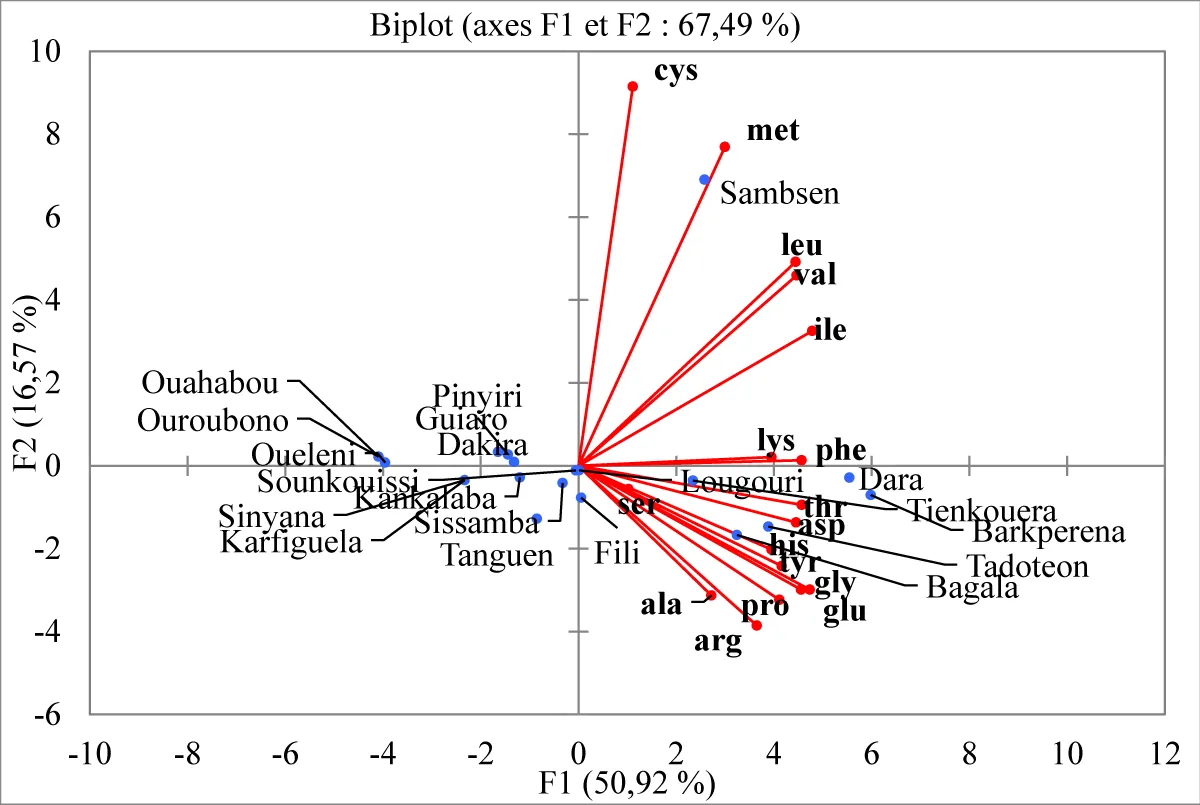
Figure 2: PCA biplot of the amino acid profile of the pulp of S. senegalensis fruits according to villages.
The horizontal axis (F1) shows the main variation in the amino acid profile, accounting for nearly half of the variance (50.92%). It highlights a clear distinction between the two groups of villages.
On one side, there are the villages in the Sud-Ouest region (Tienkouera, Barkperena, and Tadoteon) and in the Boucle du Mouhoun (Bagala and Dara). These villages clearly exhibit higher levels of specific amino acids, notably serine, glutamic acid, aspartic acid, histidine, and glycine. In summary, their profiles are characterized by an increased concentration of polar amino acids and acids.
On the other hand, the axis opposes the villages in the Cascades region (Karfiguela, Sinyana, Oueleni) to those in the Centre-Sud region (Guiaro, Pinyiri). These localities are instead associated with the presence of amino acids such as cysteine, methionine, leucine, valine, and isoleucine. It is interesting to note that, for these latter, the absolute concentrations generally remain low, but their association with these villages is sufficiently marked to define this negative pole.
The second axis, which accounts for approximately 16.5% of the variance, allows for the distinction of two groups of villages.
On one side are the villages of the Nord regions (Lougouri, Fili, and Sissamba), and on the other is Sambsen in the Centre-Sud. These are characterized by slightly higher levels of specific amino acids, including lysine, arginine, phenylalanine, proline, and alanine.
On the other side, the villages of Dakira (in the Sud-Ouest), Ouahabou, and Ouroubono (in the Boucle du Mouhoun) are observed. They are, for their part, instead associated with threonine and tyrosine.
Figure 1, a biplot, enables us to distinguish several groups of villages based on the composition of their amino acids.
In the Sud-Ouest and the Boucle du Mouhoun, a vibrant and varied profile is observed, in which serine, glutamic acid, and aspartic acid predominate.
The Nord group, around Sambsen, is characterized by higher levels of lysine, arginine, and phenylalanine.
The villages of Cascades and Centre-Sud have a more moderate profile, with intermediate concentrations.
Finally, some villages stand out for their unique signatures: Tienkouera exhibits an exceptional concentration of serine, whereas cysteine distinguishes Sambsen (Figure 2).
The amino acids in the samples of Saba senegalensis fruit pulp analyzed are divided into two categories: essential (lysine, methionine, leucine, threonine, histidine, phenylalanine, isoleucine, valine) and non-essential (arginine, glutamic acid, serine, alanine, proline, aspartic acid, glycine, tyrosine, cysteine) (Table 2). The protein content is very low, comparable to that of most fresh fruits [9].
However, the amino acid profile of this fruit highlights significant nutritional qualities. All S. senegalensis pulp samples from the various villages and regions studied contain lysine and glutamic acid, with higher concentrations in the Sud-Ouest. Furthermore, a substantial amount of serine (Ser) is detected in this region. Lysine, an essential amino acid, plays a key role in growth, muscle tissue repair, and the synthesis of hormones and antibodies [18]. Therefore, consuming the pulp of S. senegalensis fruit, even in small quantities, may help balance the intake of this essential amino acid [10] in the diet in Africa (particularly in West Africa), where the main food consists of cereals such as millet, sorghum, or maize, which are low in lysine [6,10]. This property of the fruit is similar to that of baobab pulp, another popular fruit in the Sahel, which contains about 0.3 mg of lysine per 100 g [7,13].
However, most amino acids were absent in all S. senegalensis fruit pulp samples from the different villages. Most have a very low amino acid content. Nevertheless, most fruits are not a significant source of protein compared with other foods, such as meat or fish. This could explain the absence of proteins in the S. senegalensis pulps.
These results perfectly illustrate the importance of promoting S. senegalensis by highlighting its unique nutritional qualities. For example, it can be incorporated as a natural, lysine-rich ingredient into products such as baby porridge or cereal-based biscuits. Its high glutamic acid content is important for the metabolism of sugars and fats, and it acts as an excitatory neurotransmitter in the central nervous system, including the brain and spinal cord. Additionally, it is responsible for the highly appreciated umami flavor, making it also a natural flavor enhancer [18].
The PCA analysis shows a distinct geographical pattern in amino acid profiles, which appears to follow an environmental gradient.
Samples from the Sud-Ouest, particularly from the villages of Tienkouera, Barkperena, and Tadoteon, show the highest and most varied profiles of Ser, Glu, and Asp. Several factors may explain this diversity: the region generally receives more rainfall and has fertile soils, which could influence nitrogen management in plants [8,12]. Genetic differences may also exist among wild populations of S. senegalensis across regions.
In the Nord regions (Lougouri, Fili, and Sissamba) and the Centre-Sud (Sambsen), higher levels of lysine, arginine, and phenylalanine are observed. These amino acids play crucial roles: arginine participates in polyamine synthesis, helps release growth hormones, and supports tissue repair, whereas phenylalanine is a precursor to phenolic compounds, which transmit signals among nerve cells and in the brain. Lysine supports calcium absorption and helps maintain nitrogen balance in adults. Additionally, lysine is involved in collagen formation, which makes up cartilage and connective tissue. This specificity could reflect an adaptation of plants to environmental conditions, resulting in a stress response.
This study analyzed the amino acid profile of Saba senegalensis pulp and assessed regional variation across five regions of Burkina Faso. Although pulp is not a primary protein source, it is notable for its relatively high lysine content, an essential amino acid often lacking in the local diet. The amino acid profiles differ by region, with higher lysine concentrations in the Sud-Ouest, suggesting that environmental or genetic factors may contribute to these variations.
The nutritional composition varies by region, underscoring the importance of the harvest site. This information can help tailor promotional efforts by focusing on areas with the highest nutrient density. Additionally, it can assist in selection or domestication projects to enhance resource quality, especially for samples from the Sud-Ouest (Tienkouera) and Nord.
These results offer opportunities to enhance the nutritional value of S. senegalensis fruit, particularly as a lysine supplement for cereal-based foods. They also highlight its key role in conserving the genetic diversity of S. senegalensis fruit amid environmental variation.
Data availability statement
The original contributions presented in the study are included in the article and/or supplementary material; further inquiries can be directed to the corresponding author.
Funding
The author(s) declare that financial support was received for the research, authorship, and/or publication of this article. This work was supported by the African Biotechnology Network (RABIOTECH, ISP/ IPICS project n°172 600 000). The funding covered the mobility required for sample collection, the purchase of chemicals, and the acquisition of laboratory equipment.
Acknowledgment
The authors would like to thank the technicians in the Department of Food Technology (DTA) for their contributions to this study.
Conflict of interest: The authors declare that they have no commercial or financial relationships that could be considered a potential conflict of interest.
- Arbonnier M. Arbres, arbustes et lianes des zones sèches d’Afrique de l’Ouest. Versailles: Éditions Quæ; 2019. 776 p.
- Bationo K. Usages et vulnérabilité de Saba senegalensis au Burkina Faso. Bois Forêts Trop. 2020;345:45‑58.
- Cheng G, He YN, Yue TX, Wang J, Zhang ZW. Effects of climatic conditions and soil properties on Cabernet Sauvignon berry growth and anthocyanin profiles. Molecules. 2014;19:13683‑703. Available from: https://doi.org/10.3390/molecules190913683
- Coulibaly‑Lingani P. Contribution des produits forestiers non ligneux aux besoins socio‑économiques et culturels des populations dans la zone sud‑soudanienne du Burkina Faso. Communication au Symposium intitulé Première édition des 72 heures de l’Université de Fada N’Gourma; 2021 Dec 15‑17; Fada N’Gourma, Burkina Faso.
- Ndiaye M. Composition biochimique et valeur nutritionnelle des fruits de Saba senegalensis. Int J Biol Chem Sci. 2016;10(2):864‑74.
- FAO/WHO. Dietary protein quality evaluation in human nutrition. Rome: FAO; 2013.
- Gaye SM, Paul D, Cyrille AN, Mady C, Mama S, Mar DCG. Nutritional variability of Saba senegalensis fruits. Food Nutr Sci. 2022;13(10):826‑34. Available from: https://dx.doi.org/10.4236/fns.2022.1310059
- Glew RH, Vanderjagt DJ, Lockett C, Grivetti LE, Smith GC, Pastuszyn A, et al. Amino acid, fatty acid, and mineral composition of 24 indigenous plants of Burkina Faso. J Food Compos Anal. 1997;10(3):205‑17. Available from: https://doi.org/10.1006/jfca.1997.0539
- Kristofferson TL. Amino acid analysis of savannah tree seeds. Danish Technological Institute; 2011. 31 p.
- Lykke AM, Padonou EA. Carbohydrates, proteins, fats, and other essential food components are found in trees in West Africa. Heliyon. 2019;5(5). Available from: https://dx.doi.org/10.1016/j.heliyon.2019.e01744.
- USDA. National Nutrient Database for Standard Reference. Washington (DC): USDA; 2021.
- Millward DJ. Amino acid scoring patterns for protein quality assessment. Br J Nutr. 2012;108(S2):S31‑43. Available from: https://doi.org/10.1017/s0007114512002462
- Osman MA. Chemical and nutrient analysis of baobab fruit and seed. Plant Foods Hum Nutr. 2004;59:29‑33. Available from: https://doi.org/10.1007/s11130-004-0034-1
- Tiendrebeogo S, Compaore CS, Ouedraogo ER, Ganou L, Barry RP, Zongo S, Dicko MH. Morphological variability, physical characteristics, and proximate composition of Saba senegalensis fruit pulps from plant ecotypes in Burkina Faso. Food Res Int. 2025;210:116175. Available from: https://dx.doi.org/10.1016/j.foodres.2025.116175.
- Tiendrebeogo S, Compaoré CS, Barry RP, Oboulbiga EB, Dicko MH. Comparison of nutritional, bioactive potential, and antioxidant properties of Saba senegalensis fruit pulps from five regions of Burkina Faso. Front Nutr. 2024;11. Available from: https://dx.doi.org/10.3389/fnut.2024.1358968.
- Tiendrebeogo S, Ganou L, Compaore SC, Tapsoba WF, Dicko MH. Biochemical composition of Saba senegalensis fruits from Burkina Faso. Afr J Food Sci. 2020;14(10):322‑9. Available from: https://dx.doi.org/10.5897/AJFS2020.1992.
- Yao KKT, Somda MK, Nikiema M, Mogmenga I, Dabire Y. Proximate composition and nutritional potential of Saba senegalensis fruit from three climatic regions in Burkina Faso. J Food Res. 2023;13(1):10‑25. Available from: https://dx.doi.org/10.5539/jfr.v33n1p10.
- Protéine Naturelle. Infos sur les protéines et sur les aliments protéinés [Internet]. 2025 Dec 18 [cited 2025 Dec 18]. Available from: https://proteinenaturelle.com/acides-amin%C3%A9s